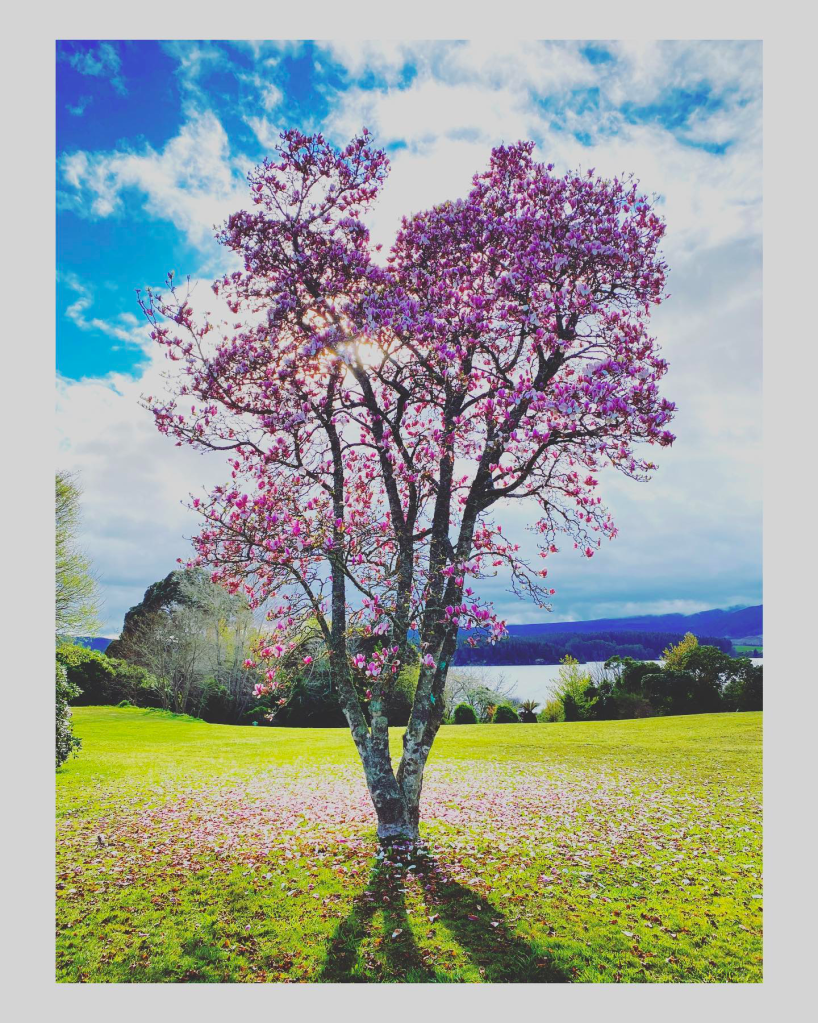
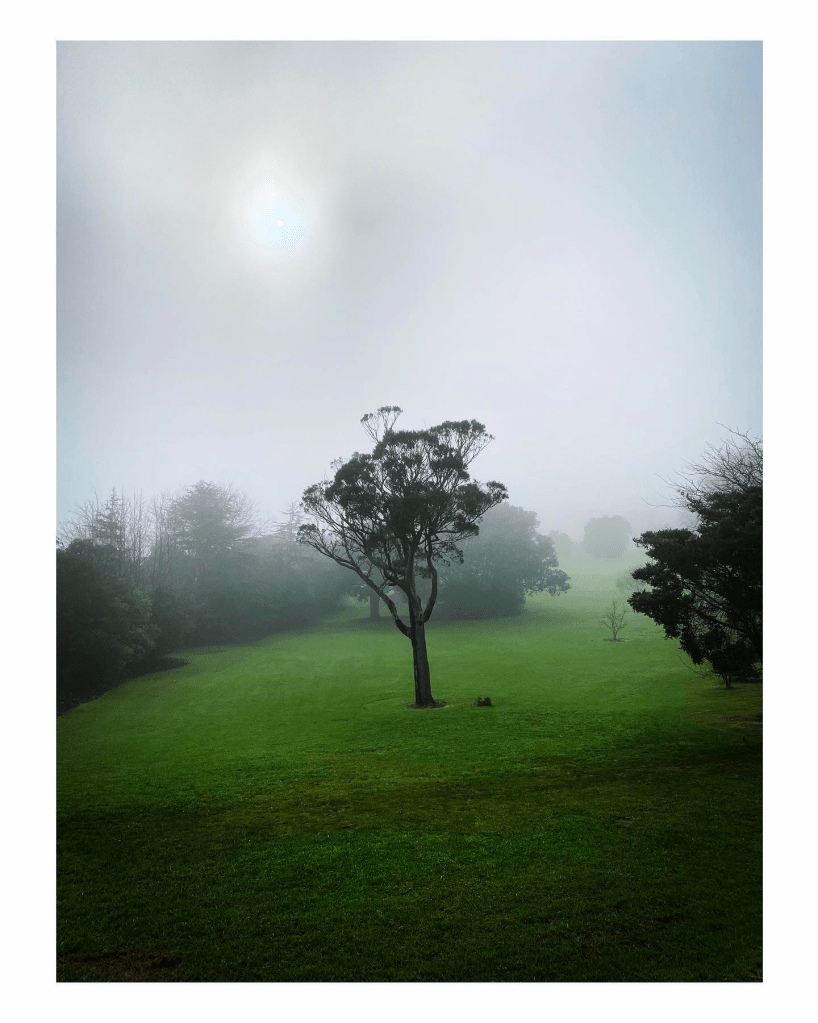
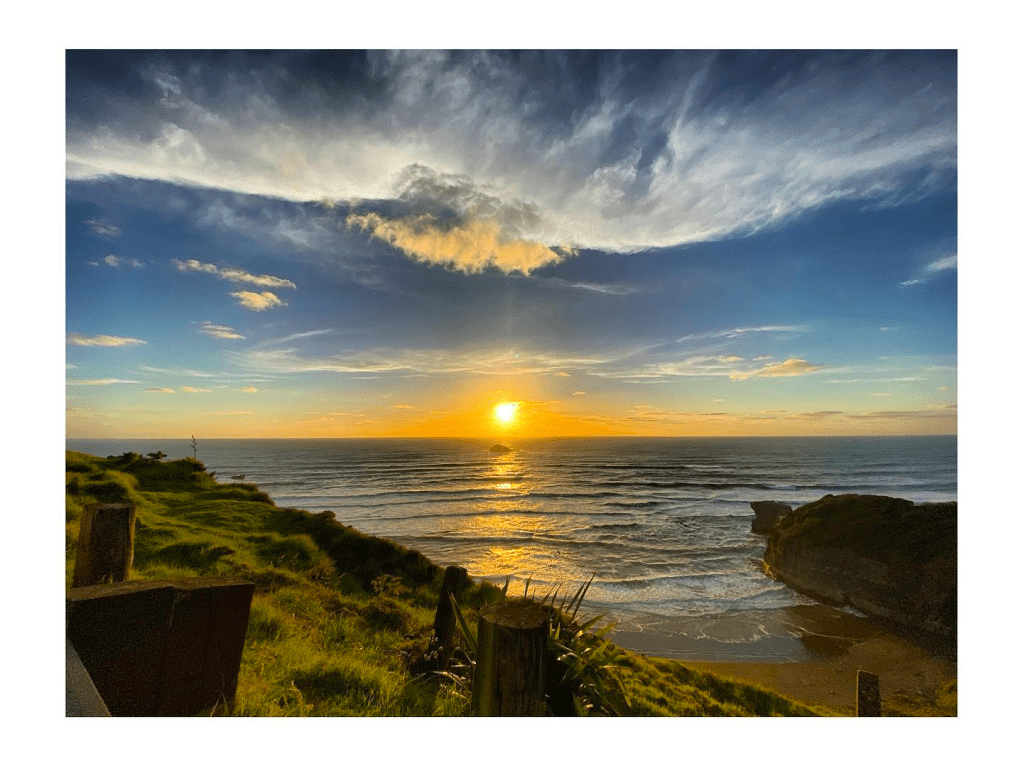
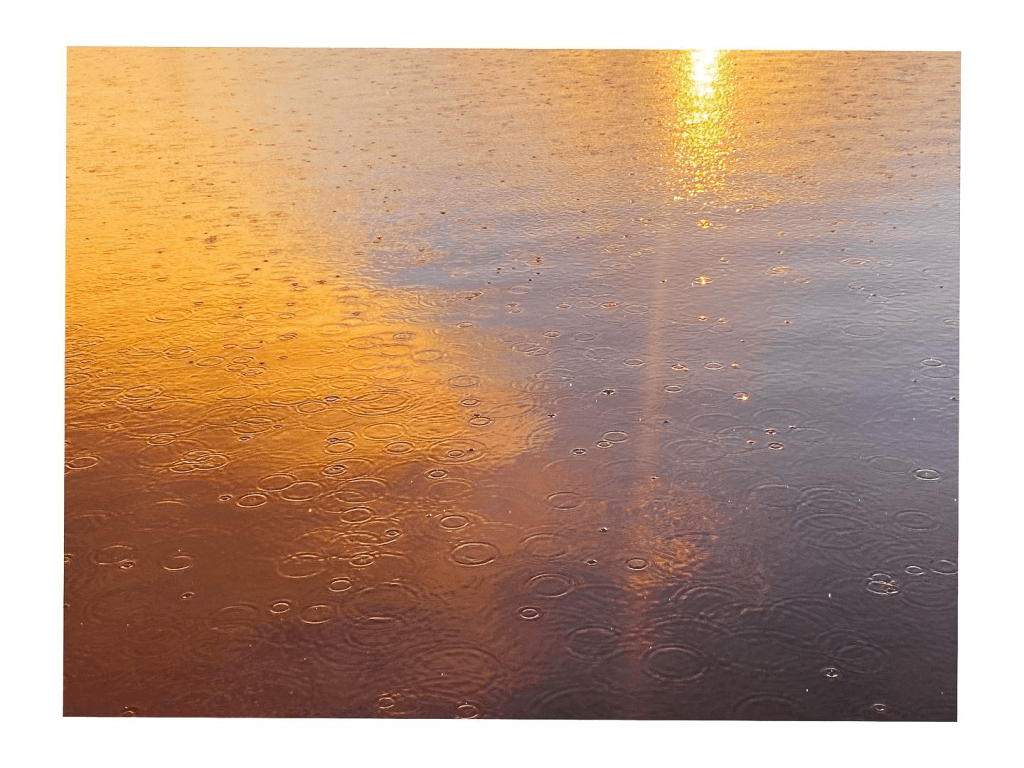
I used to think that papaya tasted like cheap perfume

Until while living in the islands, one sprang up right outside my front door

The freshness must intensify the goodness, I reckon

Flesh still warm from the sun, juice dripping

Scraping away so many black balls of seeds before scooping.

Dropping those seeds straight into the rubbish because that same tree taught me

That for a plant that springs up fast, tall, appealing, and willowy in the wind

The roots, what is beneath the surface, are ruthless

Because one day very little water came from the tap. And when we found the culprit

It was that jolly pawpaw tree

Tempting us with its fruit, but roots spreading through pipes.

The plumber that knew about these things said that you just can’t let one spring up

Right up against the house

The damage that comes is swift and unexpected. And surprisingly fierce

So to taste that sweetness, you need to take a few steps away from your walls

Stretching your legs even a little bit

Protecting your boundary, what is important, from the tyranny of something

That looks pleasant in the moment, but can wreck your supply or something vital

©Heather Pound 2021

Image: Danëlle Moolman

Today I choose to gather

Dewy fresh, not yet dried by the sun

Soft green stems, unaffected by wind

Bits and pieces, present; but often brushed aside, unnoticed—Joy

Image: Danëlle Moolman

I will gather, not because it is scarce, but because without it

What is a life to be lived?

It is the food that sustains us, yet we try to survive

With stolen morsels, a guilty pleasure

Quickly consumed lest someone else notice

Then back to more important things at hand

~~~~

But what is a life without joy?

Grasp it by the face and kiss its mouth

It is companionship not only sweet, but

Necessary to ease the cracks in our souls

To soften calloused flesh within

~~~~

I will gather joy now while it may be found

Like jewels layered beneath thick autumn leaves  

Not really hidden, yet inconspicuous, unseen

Until you pay attention and catch the glimmer

Where the sun breaks through the trees and shines

And bending down you rustle and grasp that which sparkles

To put it in your pocket

~~~~

——-let gathering joy become a habit.

©Heather Pound 2021

Self-Care/The Necessary Thing

When you have so much ‘to do’ take a moment and just ‘be’

The list will still be there but your peace might not

~~

Stop. Feel the warmth of the sun. Listen to the twitter of the bird.

Really look out the window, just stare.

Touch the texture of the fabric. Breathe in the crisp autumn air.

Taste the crème of your coffee. Feel your feet on the floor.

The order doesn’t matter, the specifics a random suggestion

Just the noticing

Engaging your senses

Image: Danëlle Moolman

Then, just be present———

For at least a few hundred beats of your heart.

Breathe in, breathe out, and be

~~

This is the vital thing, what connects you to yourself

Gives the brain a chance to quiet the worry and whisper what is best

Your heart a chance to feel, tense muscles relax

Physiology working in harmony

~~

Teach your body to remember this space

This necessary dialing down, honouring the container that serves you

The soul that feeds you

Listen to what it wants to tell you

~~

–If we don’t listen, our body finds ways to tell us anyway! And they may not be preferred.

©Heather Pound 2021.

Mental Health Week was LAST week in New Zealand, but better later than never!

Waking up again

I think just like about everyone else in the world this past year, my thoughts have been more fragmented. There has been a LOT going on! Especially so personally as I’ve been working and studying at the same time.

While writing is good, even cathartic, for my soul, my words have become less and had left me a bit parched (especially after writing long papers for my study!). But the sometimes slower pace of life, especially during lockdowns, has given me a chance to be present and connect with my inner world in ways more than I have for years.

And this has brought me back to my love of poetry.

What is it about a poem that says in one page such a huge story? It’s a pared down connection to the Great Conversation of life that often says more simply by being less. It gets to the heart of the matter in a way that leaves the reader to draw their own conclusions and have their own response to the words.

Powerful stuff.

I’ve been reading quite a bit of my favourite modern poet, Liezel Graham, who often writes from a supporting mental health perspective that has challenged me to do the same. That’s obviously close to my heart, too, since that’s what my studies are about!

I’m currently reading Devotions a collection of Mary Oliver’s poems. They’re stunning and I’ve been absorbing them a few pages at a time.

Someone asked me yesterday if I was still blogging and after I said, “Ummm nah, I haven’t for a while,” it reminded me that I still DO have a blog and I might as well start sharing some poems. (I might write other stuff, too. Who knows?)

Hope is a huge theme for me, so I have picked this first one to share because, just like the tattoo on one of my daughter’s shoulders says, “There is always hope.”

~~~~~~~~~~~~~

In the terrible night of our souls, when senses only find storm

We long to dull those senses, block out the pain

Roll into fetal— protect

But even though it hurts, more than we think we can bear

If we keep open our eyes, if only to squint

And take our hands from our ears, every now and again

We might be surprised

Because pain, the offender, doesn’t journey alone

Whether he brings them, or they have grasped onto him fierce

As if to say, “There is always hope.” There are gems

Things to refresh, like a cup of cold water to parched

A lucky find, they wait to be gathered

Things like healing, and life might be worth living, and kindness

If we grasp them in our hands to keep our ears uncovered

We might just begin to hear the song, under the surface, but louder grows

Of dreams, and longings, and the hope of beautiful things

That feed our soul in the darkness, instruct us in the deeper things of life

Until dawn

And beyond

~~~~~~~~~~~~~

Photo Credit: Danelle Moolman

©Heather Pound 2021.

To Understand and Walk Beside

“They’re just attention seeking.”

There are very few things that really upset me, I’m a (sometimes irritatingly so) naturally optimistic person. But these words in relation to a suicide attempt really chaps my hide. I want to say, “Do you really think they did that painful, awful, traumatic, shocking thing to themselves just for that?”

Years ago I spent the day with a beautiful lady whose husband had taken his life. She described her absolute shock as she was caught completely unaware. She knew he’d been ‘struggling a bit,’ but that was all. His every thought in taking his life was for her. He did it in the garage and made sure it would be easy to clean. He left a message on the answering machine to explain how much he loved her and how he knew that her life would be better without him. He called 911 before he did it so she wouldn’t be the one to find him.

I left the day forever changed in my assumptions of how things could go and what it was like to be the one walking beside.

-Photo credit: Danelle Moolman

A suicide attempt is a desperate response to an ongoing, agonising internal battle. It’s often a response to terrible, unbearable psychological pain, or a real, seemingly logical, belief that the world and the people that they love would be better off without them. It’s frequently not actually wanting to die— it’s just not wanting to live (Lickerman, 2010). It’s not attention seeking, but it might be the only way someone can think of to ask for help.

For various reasons, three different people who are part of my whole heart have tried to take their lives. Two I was present immediately after for, one I didn’t know about for years. While I have thankfully never reached the point of being suicidal myself, I have walked beside loved ones in significant pain and have learned a few things along the way.

-Photo credit: Danelle Moolman

First of all, if you are worried about someone ASK THEM. People often feel like they don’t want to put the thought of suicide into someone’s head, but studies clearly show that not only will it not move them towards suicide, but that you might just save their life by asking (Mental Health Foundation, 2020). If anything, allowing them to let their thoughts out of their heads into the light of day can allow them to begin a journey towards finding help and healing. Take them seriously. And believe them.

Secondly, BE THERE for them. Don’t try to solve their problems, don’t try to fix them, don’t judge them or minimise their distress. Listen to them. Love them. As I walked through the ER looking for a loved one who had just attempted, a nurse, who might as well have been an angel from Heaven (!), drew me close and said, “I’ve been where you’re standing. And no matter what you’re feeling right now, you’re going to take a deep breath, and walk into that room and just love them.” When I asked later how to support this person, a counsellor said that they would be having all sorts of conflicting emotions now including shame and would be, “Looking for holes in your (my) love.” Your person’s behaviour and mood might be all over the place and it won’t be easy, but be there. And consistently love.

-Photo credit: Danelle Moolman

Next, help them to HOPE. One of my people reminded me recently that when they sobbed that they had no hope left, I said, “That’s OK. I will hold it (hope) and keep it safe with me until you find it again.” I don’t really remember saying the words, but I do remember an instinctive wanting to scoop hope out of my own body to pour into theirs. And because I had no idea what else to do! Modelling that there is still hope is apparently a powerful tool and had a significant impact on my people at least. Believe that there is hope for them and hold onto it until they can believe it for themselves.

Know that it will take TIME, so look after yourself, too. There isn’t a quick fix for this. It’s not going to be over in a week, a month or maybe even a year. When someone you love is hurting, you’re in it for the long haul. As they’re growing in strength and healing, you need to keep your own energy up to stay the course with them. Find time to do what fuels you. Talk to a counsellor to process your own feelings. Exercise. Be still. And curate a support network if possible around your person so you don’t have to carry it all alone.

-Photo credit: Danelle Moolman

Don’t let OTHER PEOPLE’s opinions matter. People often want to place blame to make themselves feel more comfortable about an uncomfortable topic, but you don’t need to explain everything to everyone. Remember that your person who was suicidal has their own story and you need to help it remain private until/unless they want to share it themselves. Outsiders will have suggestions and might sincerely want to help, but you have the right to pick and choose who you will listen to and what you will pass on to your person or not. Their well-being is more important than your well-meaning acquaintance’s feelings.

Finally, know that this is NOT FOREVER. Seasons change, Spring comes again, time heals wounds. Your loved one may struggle again later, but with the right support it will hopefully get less frequent and less severe. The sun will shine again and this too shall pass.

I look at my people now with awe at their growth and courage. They inspire me. And I am grateful every day that they are still here.

If you are worried that someone is struggling with suicidal thoughts click here—> https://www.mentalhealth.org.nz/assets/Suicide-pdf-updates-dec-2019/Are-You-Worried-2019-1.pdf

-Photo Credit: Danelle Moolman

References:

Likerman, A. (2010). The six reasons people attempt suicide. Retrieved from: https://www.psychologytoday.com/nz/blog/happiness-in-world/201004/the-six-reasons-people-attempt-suicide

Mental Health Foundation New Zealand. (2020). Suicide: Worried about someone? Retrieved from: https://www.mentalhealth.org.nz/get-help/a-z/resource/48/suicide-worried-about-someone

We’ve never done this before…

When I walked through the supermarket a couple of weeks ago and was greeted by empty shelves and people grabbing the last packet of –whatever– I wasn’t bothered. On some levels I feel like I’ve spent most of my life preparing for moments like this! My brain easily went to the, “Oh I can’t get this today so what can I do instead?” mode after years of uncertainty in grocery stores, open air markets and bazaars in the places that I’ve lived. I rose to that challenge quite easily, but was surprised later in the day when I found myself feeling jittery. What was that about? I had to stop and take stock.

I realised that although I didn’t find the lack of food on the shelves alarming, I was disturbed by the atmosphere I sensed in the store. The feelings of surprise, shock, panic and even suspicion swirling around me. Those feelings were quite familiar and took me right back to the 2000 coup in Suva, Fiji. Being at the house of someone whose husband worked at the Australian high commission while our kids played. Her husband calling and telling us all go to home and stay there. One of the ladies and her children came to our house instead since they lived close by the Parliament building and never went back to their home before they flew out a week later. (We found a hole in their window and a bullet on their bed when we went to pack up their things for them months later.) I remember the looting that happened at shops that night and the man who woke us at 2am throwing rocks through the windows of our van. The armed road blocks, the curfews, the unexpected lockdowns that were suddenly enforced, the months of rolling power cuts, the night of the military mutiny later where we heard gunfire and explosions all night long. All came back because of a feeling in the air in the store. When I recognised the source of what I was feeling, I was able to logically put the current situation in perspective and the jittery feeling left.

Our bodies remember trauma.

I had had a lot more life experience than this too before the panic attacks started in late January of 2007, including the sudden death of my husband at our home in Fiji six months before. So what started the panic attacks then? A lot of unresolved things that had built up over the years, yes, but mostly just being worried about my children and their future. While living a couple of blocks away from my parents in the USA. In a beautiful little house (with no power or water cuts) and driving a comfortable mini van that I had been given. And knowing that I had enough money in the bank through the generosity of others for our near future.

There’s really no rhyme or reason in the conscious mind as to just when the unconscious mind chooses to scream, “I’ve had enough!”

Back to today. We’re living in a very strange, unprecedented period of time. We’re facing a lot of uncertainty and for the first time in my generation’s lifetime there’s nothing that we can do to just sort the collective problem. Scientists are working hard to find something to help us with this virus, but our economies are struggling and the future is uncertain. I’m still on the email list for the US Embassy in India and have been getting dire messages basically saying if you don’t leave NOW you’re here for the duration. The current lockdown in New Zealand isn’t fun for everyone, but I think of our friends in Kolkata who live ten people to one room and for the one million homeless in the city who don’t even have a door to shut to keep themselves safe or enough food for today–let alone for tomorrow. The ability to comfortably lockdown is a privilege.

So that leads me to the point of this blog today. I imagine that there are those of you who might recently have had your first panic attack. Or you might not be sleeping well. The walls of your home might be closing in on you a bit or you might be consistently trying to shove financial worries out of your mind. You might have an elderly relative that you hope is Ok, or you might have Asthma yourself. Or the unfamiliar situation might just be upsetting your kids and weighing you down. I hear you—–and what you’re feeling is valid! I didn’t bring up the poor in Kolkata just now to dismiss what you may also be feeling. My heart and prayers go out for them, but pain, is pain, is pain. And it’s not a competition.

For anyone who has been on the mission field or involved with people-helping professions you may have heard of Compassion Fatigue. Compassion Fatigue is basically the process of not valuing or looking after your own needs because you think that someone else’s needs are greater. This is something I fell prey to when we lived in a red light district in Kolkata. There were girls just up the road being forced to sell their bodies every night so how could I complain when I struggled with the heat, the dust, the noise or the heart-wrenching sights I saw around the city? I shoved it down instead. Did I have a right to even feel upset when it was THEIR pain every day???

We are experiencing an interesting phenomenon right now in that this is not just a problem ‘over there’ in other parts of the world. This is something that’s affecting us ALL. The news reports in other places aren’t as removed as usual and hit us right at home. I wonder if there are those who are shoving down their own feelings right now because you and those you love aren’t sick? You have a relatively peaceful home environment and enough food in your cupboards for the week?

My advice? Take those thoughts/feelings out sooner rather than later and let them breathe. Give them a chance to have their say. Use your rational mind to give them a little perspective and talk to God about them before you put them back for now. But let them out again before long.

If this blog is starting to sound too ‘self-helpy’ for you right about now, please don’t stop reading– because someone you’re close to might need you to help THEM today. (And my hope is that someone might not have to figure this stuff out along the way like I did.)

Distraction is an excellent tool and a great way to get through periods of stress, but we also need mindful reflection to actually address what’s going on in our minds and hearts. Use distraction, but don’t neglect mindfulness. Stop and listen to that birdsong (there’s a Tui going crazy outside of my window right now!), feel the sunshine on your skin, taste that piece of fruit, savour your morning coffee (if that’s your jam), and memorise again the faces of those that you love. Stop and breathe deep and slow a number of times per day.

If things get away from you and you feel panic coming on, your natural fight or flight instinct can kick in. What I find helpful is doing the opposite of that and rather than running from the anxiety, l-e-a-ning into it. Your body is your friend and it’s trying to communicate with you. Remember that! Respect your body and what it’s trying to tell you right now. When that first awful feeling of a panic attack starts you have a few seconds where you are still in charge before it sweeps you away. If you can, capture that moment when your chest gets tight and your heart begins to race and start your deep breathing and listen to your body. For me when I capture that moment, it’s like I feel the anxiety storm building and vibrating in my body, I note that it’s there, but then let it vibrate right out through my skin. Your experience might be totally different, but leaning into it works for many. I can count on one hand the amount of panic attacks I’ve had in the last 10 years using this method.

If you miss those moments and an attack sets in, ‘grounding’ your senses often helps. Put your feet flat on the floor so you feel it or lay flat on your back, notice: 5 things that you see, 4 things you can touch, 3 things you can hear, 2 things you can smell and one thing you can taste. Repeat this until you’re feeling better. Have things that you know speak to you ready in your mind for times like these. “God has not given me a spirit of fear but of power and love and a sound mind” (2 Timothy 1:7), is something I have played on repeat when needed. Hold the hand of someone else or put one hand across and under your opposite armpit and the other hand across to the opposite shoulder to feel the ‘container’ that you’re in. And don’t forget to remember that your body is actually your friend–even if it doesn’t feel like it right now!

There are so many stories that go on in our heads that form the basis of who we are and how we relate to the world around us. Sometimes letting those stories out and hearing them out loud by talking to a trusted friend is all that we need to make sense of things and take back power over our own thoughts. Addressing what is troubling you is waaaay more effective than shoving it down and ignoring it. Not matter how much you try to bury it, it’s still ‘talking’ to you. De Nile is a river in Egypt—not something that’s at all helpful for you!

Whatever you do remember that you are not an island—and ask for help! There are many counsellors out there taking appointments over Zoom right now even while we can’t get together in person. Talking to someone else isn’t weakness, in fact it takes a huge amount of courage!

Put good stuff into your mind throughout the day. “Whatever is true, whatever is noble, whatever is right, whatever is pure, whatever is lovely, whatever is admirable–if anything is excellent or praiseworthy–think about such things” (Philippians 4:8). It can feel good in the same way that scratching a scab might be to check the news 20 times a day or watch a really scary movie, but is that what’s actually best for your well-being? Limit your caffeine and sugar intake as these can add to your anxiety. Get some exercise every day! This has been scientifically proven to be as effective as medication for many. But if you’re just not coping, talk to your doctor as your system might benefit from some support at least for a time.

And last but definitely not least, don’t forget your spirit. Talk to God, do the things that you know bring you close to him. Our pastor recommended an app called ‘Lectio 365’ that is just awesome. It’s about a ten minute audio daily devotional delivered in a really reflective way giving you space to respond as it goes.

God is big enough to handle the hard questions you may have for him right now too— and he might just want to show you a bit more of his heart for you and the world around you in the process. This is his world. He sees and knows what’s happening here. He also sees and knows YOU. He knows what makes you tick and what you may be going through right now.

The Lord is my light and my salvation—
    whom shall I fear?
The Lord is the stronghold of my life—
    of whom shall I be afraid?

When the wicked advance against me
    to devour me,
it is my enemies and my foes
    who will stumble and fall.
Though an army besiege me,
    my heart will not fear;
though war break out against me,
    even then I will be confident.

 One thing I ask from the Lord,
    this only do I seek:
that I may dwell in the house of the Lord
    all the days of my life,
to gaze on the beauty of the Lord
    and to seek him in his temple.
 For in the day of trouble
    he will keep me safe in his dwelling;
he will hide me in the shelter of his sacred tent
    and set me high upon a rock.

Then my head will be exalted
    above the enemies who surround me;
at his sacred tent I will sacrifice with shouts of joy;
    I will sing and make music to the Lord…

…I remain confident of this:
    I will see the goodness of the Lord
    in the land of the living.

 Wait for the Lord;
    be strong and take heart
    and wait for the Lord.”

(Psalm 27: 1-6, 13-14)

We Get to Choose….

Choice is a precious thing. When we have resources, government or cultural enforced rights, relationships, security and time, we are privileged with choice. Many times we don’t even recognise our privilege. My husband once took a New Zealand based online class while we were living in India. One day he came out of our bedroom shaking his head after an online discussion where the women in the class were up in arms about ways they felt professionally discriminated against in New Zealand. Is there room for improvement there? Of course (my husband thought so too). But sitting in our flat just up the road from brothels where women are trafficked in an impoverished red-light district in Calcutta, the amount of choice available to women in New Zealand seemed impossible, mind-blowing light years away when compared with the experiences of and opportunities available to the women who were our neighbours. A whole different, surreal world somehow coexisting on the same planet. It brought home to us that choice is a gift to be exercised with gratitude and a responsibility with far reaching consequences.

Photo Credit: Hannah Bates

My ‘go to’ piece of marriage advice when asked to write something down at a shower or a wedding is this, “Make it a practice to actively choose your spouse all over again each and every day.” I’m not sure where I first heard that advice but it’s something that I find not only incredibly useful but also wonderfully enriching in my own life and marriage. In her excellent book Made for More, Hannah Anderson suggests in passing that we apply this practice to our relationship with God. It has been such a great focus in my marriage that it jumped off the page and I decided to actively give it a try.

The results have been amazing in a number of different ways! I chose to be a follower of Jesus many years ago and that hasn’t changed, but bringing the act of choosing God into my daily life, even briefly, causes me to consider and embrace a number of things with concrete benefits.

One of the effects of actively choosing God every day that surprised me has been a deeper acceptance of the things that God does. For example, recent seasons of life for our family have included a number of painful situations that have just gone on and on and on. And on. I don’t know about you but I find it hard to let myself be upset or angry with God. I know that he’s bigger and smarter than I will ever be. I firmly believe in his everlasting love and not only in his good intentions for us, but his ability to bring them about. I expect difficulty in this life and am not surprised by it—but sometimes I have to admit that I do have issues with the frequency of trials. Again, Lord? Or the ways some of them streeeeetch on and on. Being a ‘good’ follower of Christ I don’t want to complain and tend to force these thoughts out of my conscious mind, but I really am upset on the inside. Not very authentic, aye!

Photo Credit: Hannah Bates

Choosing God again every day has made me consciously realise that if I choose God about this, the good stuff, then I also have to actively accept that, the things that are hard that I don’t understand or just wish would end. The act of choosing makes me consider the things that I really don’t like and not just shove them down in my heart. Instead with a continued act of choice, I daily take them out and find myself processing and accepting them again for today instead of fighting them. It’s also a good motivator to take a moment and pray and remember just Who is going before us in the battle. “Out of my distress I called on the Lord; the Lord answered me and set me free. The Lord is on my side; I will not fear” (Psalms 118: 5-6, ESV). Challenges produce a lot of good alongside the bad, too, so an opportunity is provided through the choice to acknowledge and lean into the good stuff: the things we are learning, the strength we are gaining, and the progress already made. The byproduct of this just might be some healthy, encouraging, more balanced perspective that keeps us going for the day.

Speaking of good stuff, the habit of daily choosing God creates an opportunity to remember and celebrate ALL that is good about him. And there is soooo much of that! The things that he has accomplished for us in the past; the mountains he has already helped us climb; the things he’s done that might be minor but thrill our hearts nevertheless; the zillions of ways that he has blessed us in the present, not because we deserve them but simply because he loves us; and the future that we can look forward to in him. Stopping to daily choose him also gives us a moment to remind us Who he is: all-powerful, all-knowing, all-wise, and the origin of love itself. After all, “God is love” (I John 4:8). He is our source of love, of peace and is infinitely kind. Forgiveness is so much in his nature that he came and died to make a way for us to be forgiven as well. He is currently as close as the air we breathe through his Holy Spirit that fills us, comforts us and walks us through the process of becoming more like himself. A process that is freedom bringing.

Daily focus on God through choosing him once again creates an attitude of gratitude in our hearts. God has neurologically wired us to benefit from gratitude. Gratitude impacts the hypothalamus which helps regulate sleep and eating patterns. It stimulates parts of the brain that releases dopamine and creates positive thought cycles.* Gratitude produces minds and hearts ready to connect with and worship the King of Kings. “Give thanks to the Lord for he is good, for his steadfast love endures forever” (Psalms 136: 1).

Finally, and not by any means least, daily conscious choice of all that God is and does builds an active relationship with our Heavenly Father that nourishes us. It deepens our faith and produces things like love, joy, peace, patience, kindness, goodness, faithfulness, gentleness and self-control (Galatians 5:22-23). Since choosing him each new day includes accepting both the obvious good and the painful, it keeps our relationship with him fresh and unencumbered from things inside our hearts that build walls. We all have times where he feels distant and hard to reach, but God who promises to never leave us or forsake us (Hebrews 13:5) does not drift away. If distance happens perhaps it is our own hearts that need to be evaluated. What exactly is off? A daily choosing of him gives God the opportunity to speak softly to our hearts to bring us close. Good times bring us to gratitude and praise and hard times allow us to lean into the Rock that shelters and gives strength.

“and pain has leached the sunlight from your bones.

what will you do with this gift?

— you can make anything from ashes. even beauty.”

-Liezel Graham**

Daily choosing him. Choosing what he brings. And choosing to let him make it into something beautiful. It keeps us in close relationship with him, creates both gratitude and change, produces fruit in our own lives—and allow us to be his fragrance to others. The opportunity of choice is there to consciously and diligently build our lives on him each and every day.

“Let your roots grow down into him, and let your lives be built on him. Then your faith will grow strong in the truth you were taught, and you will overflow with thankfulness.” (Colossians 2:7)

Photo Credit: Hannah Bates

*Korb, A. (2012). The Grateful Brain. Retrieved from: https://www.psychologytoday.com/us/blog/prefrontal-nudity/201211/the-grateful-brain

**Graham, L (2018). Retrieved from: https://www.facebook.com/liezel.graham.writer/

CAN we love?

People who choose to spend their lives serving others are often wired to give. And give, and give. Of course, everyone is selfish sometimes, but in general those who have sacrificed to follow a path of service have the ability put others before themselves. While sought after and good, this path is fraught with an ongoing struggle to mindfully walk the fence between giving of one’s self, yet maintaining personal well-being in the process. This delicate, balancing act is key to developing resilience, something I’m passionate about promoting after watching people drop like flies around me from burnout on the mission field and experiencing burnout myself. Those who are inclined to give are not necessarily naturally gifted in looking after themselves.

images-6

Recently I read the amazing passage in Romans 12:9-21 where Paul spells out the basics of what it means to live life as a Believer in Christ. It’s so, so good that I’ve given myself a little challenge to re-read it often and to honestly evaluate where I am currently at. Things like: genuinely love, hang out with the lowly, show each other honour, want good things for those who persecute you, don’t think that you’re wise, feed your enemy and don’t repay evil that he may have done to you, and be patient when you’re going through a hard time.

These basics are beautifully summed up in Romans 13 which says, “You shall love your neighbour as yourself. Love does no wrong to a neighbour” (English Standard Version). Basically we can fulfil anything that God wants from us by extending love. Because he created us to be relational beings and this is the best way for us all to not only get along, but live together really, really well. A way that not only is good for those around us but meets the deepest desires within our own hearts. It’s joining in on the Divine dance of who God inherently is. After all, “God is love” (I John 4:8, ESV).

Sometimes it’s good to get back to basics.

It occured to me that a good mark of well-being might be to stop and consider how well we are doing in the love department. Can we love? Are we too tired, too stressed, too fed up with life, too jaded so that we have lost our ability to love? Or god forbid, are we too proud, too caught up with our goals and achievements that we have somehow forgotten love’s value?

Christian psychologist Dr. Caroline Leaf recently posted on Facebook, “Every morning I check my mindset, making sure I start the day off thinking well. I focus on what I’m grateful for and what I’m letting go of. I used to start each day a little negative, thinking about how stressed I am and how much I need to get done. Now I make it a goal to start off the day in a healthy and constructive way. I tell myself that not matter what happens today, it is going to be a great day and I’m going to make every opportunity a learning opportunity.” A great example of how to consciously and mindfully (yes, those are different words, I checked!) live. Living in healthy and helpful ways usually takes paying attention, self-discipline, and mindfully taking stock. I’m not talking about just deciding to love better by sheer force of will, but to give out of an overflow of what is inside us. And even small adjustments to keep our own love tanks filled up in the ways that we do things can go a long way towards producing health and resilience in our own lives while we then love others.

So if the basics of life as a Believer revolve around love, what are the basics of making sure that we have love to give?

Jeremiah 17:8 says, “Blessed is the man who trusts in the Lord, whose trust is in the Lord. He is live a tree planted by the water that sends out its roots by the stream, and does not fear when the heat comes for its leaves remain green and is not anxious in the year of drought for it does not cease to bear fruit” (ESV). This verse is basically a ‘how to’ on removing fear and anxiety. A key to creating longevity and resilience. Growing slowly, steadily, putting out deep and trusting roots into the Water that never runs dry because he is the Source. When we actively submit ourself in the process of growing strong though him we can love through his love, walk in his wisdom, live in his strength. I don’t know where the saying came from but, “When the roots are deep, there is no reason to fear the wind.”

On the first Sunday of Advent this year our pastor talked about expectation in the waiting. At the end of the service every family was given the opportunity to take a pot and plant a bulb to watch it grow through this season. I have only recently become successful at keeping plants alive(!) so I decided to take this process seriously. It’s been a surprisingly meaningful experience to watch this plant on my windowsill flourish as I think about expectation in the waiting. Bit by bit. Day by day. Only three weeks ago it was just a bulb and now it looks like this:

unnamed

I can’t visibly see it grow in the moment, but clearly growing it is. And it will eventually blossom! Our lives are like a plant. Seemingly imperceptible growth at times, but with sun and water our roots will become steadily nourished by the good soil of our Creator. But we also have to keep him as our Source.

We’ve all heard, “I can do all thing through him who strengthens me” (Phil. 4:14, ESV). We can use that almost as an excuse to mindlessly just ‘keep on keepin’ on.’  Sometimes we forget the verses that come before, however, that talk about knowing how to live in various different circumstances, good and bad, easy and difficult and yet finding strength. Banning Liebscher says in his book “Rooted” (He is American so don’t giggle at that word, Kiwis!), “When we put, “I can do all things through Christ who strengthens me” in context, we see that Paul was saying, “I’ve had seasons in life where I’ve had nothing and sessions where I’ve had everything. I’ve developed the ability to thrive in both seasons by learning to access the resource that never changes, no matter the season, namely, Christ’s strength.

Similarly, when you read the Psalms, you find David spoke about all kinds of circumstances, ranging from celebratory to terrifying. He wrestled with impossibilities, fear, heartbreak, disappointment, betrayal, anger, and grief. But every time, the wrestling drove him back to the source of his strength: God. And every time David accessed that strength, whether in the field, a house, a cave, or a castle, it led to his thriving.”

And isn’t that what we need to keep giving of ourselves for others in this life? We need strength to not just survive, but thrive. God is our Source of strength–but sometimes we forget to prioritise him in the wrestling only to find ourselves depleted and dry. Just like a healthy plant slowly grows, the ‘plant’ of our lives gradually becomes parched and desperate for Living Water.

God is the Source of strength that we access to be a conduit of love for others. But we also need that love ourselves. Romans 8 says, “Who shall seperate us from the love of Christ? Shall tribulation, or distress, or persecution, or famine, or nakedness, or danger or sword? No in all things we are more than conquerors through him who loved us. For I am sure that neither death nor life, or angels nor rulers, nor things present nor things to come, nor powers, nor height nor depth, nor anything else in all creation will be able to separate us from the love of God in Christ Jesus our Lord” (vs. 35, 37-39, ESV). That promise is one of my favourites in the Bible! His love will never not be available to us. NOTHING and no outside force can make it go away.

If the basics of our faith in relationship to humanity is to walk in love, perhaps a simple and useful barometer of our well-being is to intentionally and regularly examine how well we’re doing just that. Can we love? How well are we doing with the people in our lives? Mindfully and carefully keeping track of the ‘love’ barometer can go a long ways toward creating resilience for the long-haul in our lives. That outward check can clue us into the early warning signs of an internal lack. Finding the balance of being filled ourselves first is key to the ongoing resilience that we all need to keep on giving. “Love your neighbour as yourself.”

Are we not able to love as a basic expression of our faith? Have we been tapping into our Source? Are there things we’re expecting of ourselves that God hasn’t actually asked of us? Are there ways we’re unrealistically trying to be superhuman and not nourishing ourselves before we try to pass nourishment along to others? Are we ignoring and shoving down pain? Have we been lax about stopping and connecting with the never-ending love that God has for us? He hasn’t gone anywhere, but have we?

I don’t believe that this process is a ‘pass or fail’ exercise. It’s not meant to be guilt producing–but freedom bringing. The ongoing process of mindful evaluation helps us grow stronger as we tap into the Source of love and strength that will never run dry. If we’re struggling, and let’s be honest we all do, maybe the output isn’t matching the input and we need to take a break or find a different pace.

We can’t pour from an empty cup.

IMG_4049